Ofuda Guide: Where to Place the Sacred Talisman You Brought Home
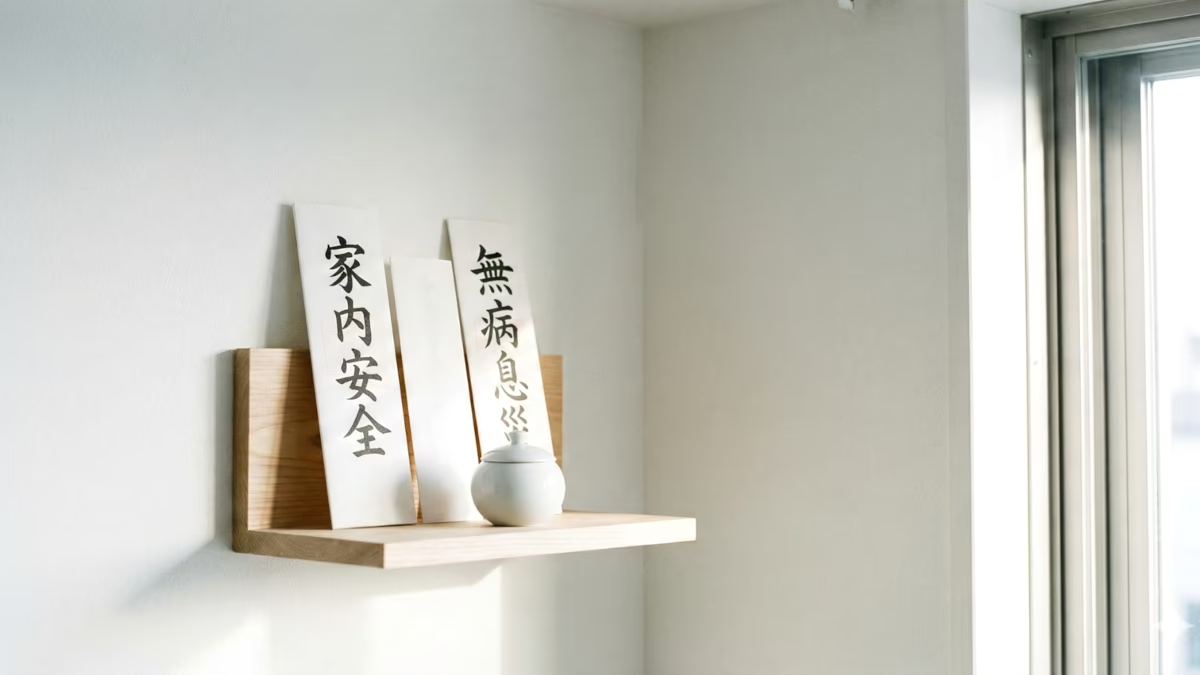
A Japanese friend handed you a paper talisman and said, "This is an ofuda — it's sacred, please take care of it." Or maybe a relative sent one from Japan. Now it's sitting on your shelf and you're wondering: "What exactly am I supposed to do with this?"
You're not alone. According to kamidana (home shrine) shop owners, most customers come in not because they visited a shrine themselves, but because someone gave them an ofuda and they want to enshrine it properly.
This guide covers everything you need to know: what ofuda actually are, where and how to enshrine them, what to do without a kamidana, and how to properly return them when the time comes.
What Is an Ofuda?
An ofuda is a sacred talisman containing a portion of a deity's spirit (wakemitama). Unlike omamori (charms you carry with you), ofuda are meant to be enshrined at home.
There are three main types:
- Jingū Taima: The ofuda of Ise Grand Shrine, distributed at shrines nationwide. The most fundamental ofuda in Shinto practice.
- Ujigami ofuda: From the local guardian shrine of your neighborhood.
- Sūkei-jinja ofuda: From a shrine you personally revere — often one you visited during travel.
Placement Rules: Direction and Height
When choosing where to place your ofuda, keep these principles in mind:
- Above eye level: Ofuda should never be looked down upon. Place them on a high shelf, atop furniture, or mounted on a wall.
- Facing south or east: The front of the ofuda should face south (ideal) or east. These directions are associated with sunlight and positive energy.
- In a clean, bright space: Avoid placing ofuda near bathrooms or in cluttered areas. A living room or a bright, well-visited room is ideal.
That said, don't let the rules stop you from enshrining at all. A clean, respectful spot where you feel at peace is always better than a "perfect" direction you can't achieve.
No Kamidana? No Problem
You don't need a traditional kamidana (shrine shelf) to enshrine ofuda properly. Modern alternatives include:
- Wall-mounted mini shelves: Designed specifically for ofuda. Many attach with pins or adhesive strips — perfect for rentals.
- A clean shelf with white cloth: Lay a white cloth or washi paper on a bookshelf and lean the ofuda against the wall.
- Ofuda stands: Simple wooden stands made specifically for ofuda. Compact and elegant.
What matters is reverence, not furniture. If you treat the ofuda with care, you're already doing it right.
Stacking Order (When You Have Multiple Ofuda)
If your kamidana has three doors (sansha-zukuri):
- Center: Jingū Taima (Ise Grand Shrine)
- Your right: Ujigami (local shrine)
- Your left: Sūkei-jinja (personally revered shrine)
If your kamidana has one door (issha-zukuri), stack them front to back:
- Front: Jingū Taima
- Middle: Ujigami
- Back: Sūkei-jinja
Even without a kamidana, place the Jingū Taima in the most prominent position.
Returning Old Ofuda
Ofuda are typically returned and renewed after one year. The most common timing is during New Year: you receive a new ofuda and return the old one.
- Return to the original shrine: The most respectful option. Look for the kosatsu-osamejo (old talisman collection box) at the shrine.
- Ask a nearby shrine first: If you can't travel back to the original shrine, contact a nearby shrine before bringing the ofuda. Acceptance policies vary.
- Dondo-yaki: A traditional bonfire event held around January 15, where New Year decorations and ofuda are ceremonially burned.
- Check whether return by mail is available: Ask the issuing shrine whether the ofuda can be sent back, and follow its instructions before mailing anything.
This guide does not treat household disposal as a universal Shinto practice. When in doubt, ask the issuing shrine or a local shrine rather than relying on a generic disposal method.
Summary: Start with One, Treat It with Care
Enshrining ofuda can seem complex, but the first step is remarkably simple:
- Choose a clean, high spot — south or east facing if possible.
- A kamidana is nice but not necessary.
- Jingū Taima goes in the center (or front).
- Return old ofuda to a shrine after one year.
Consistency beats perfection. What matters most isn't getting every detail right — it's honoring the connection between you and the sacred, in whatever form your life allows.
Keep your ofuda close in a quiet moment
Photograph your ofuda in Kamidana and make a small place to return to it in your day. A quiet moment whenever you want to pause, reflect, or offer thanks.
Editorial and sourcing policy
This guide uses guidance published by Jinja Honcho and Ise Jingu for displaying and returning ofuda. Acceptance policies vary, so confirm with the issuing shrine or ask a local shrine first.