Omamori Guide: Types, How Long to Keep Them, and How to Return Them
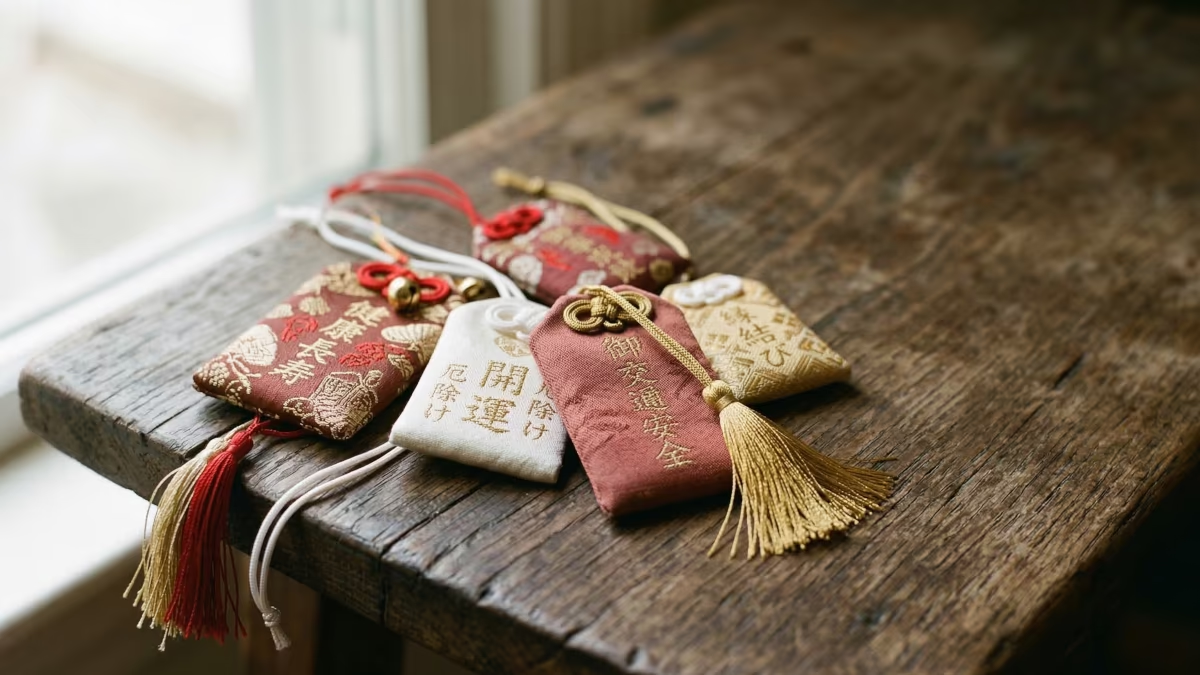
You received an omamori from a Japanese shrine — or a friend brought one back from Japan as a gift. Now it sits on your desk, or hangs from your bag, and you're not entirely sure what to do with it.
How long should you keep it? What happens if it wears out? Can you throw it away? Do you need to return it somewhere?
This guide answers all of those questions — clearly, respectfully, and without assuming you already have a background in Shinto.
What Is an Omamori?
Omamori (お守り) are protective charms sold at Shinto shrines and Buddhist temples across Japan. The word comes from mamoru (守る), meaning "to protect" or "to guard."
They are typically small fabric pouches containing a piece of paper or wood inscribed with prayers or sacred characters. The pouch is never opened — doing so is believed to release the protective power inside.
Omamori are not simply souvenirs. They represent a prayer made on your behalf by the priests of that shrine, and they carry that intention with them wherever you bring them.
Common Types of Omamori
Different shrines and temples issue omamori for different purposes. Here are the most common types you'll encounter:
| Japanese Name | Purpose | Common Colors |
|---|---|---|
| 縁結び (En-musubi) | Love, relationships, meaningful connections | Pink, red |
| 交通安全 (Kōtsū anzen) | Traffic safety, safe travel | White, yellow |
| 学業成就 (Gakugyō jōju) | Academic success, passing exams | Blue, white |
| 健康祈願 (Kenkō kigan) | Health, preventing illness | Green, white |
| 商売繁盛 (Shōbai hanjō) | Business prosperity | Gold, red |
| 厄除け (Yaku yoke) | Protection from misfortune | White, purple |
| 合格祈願 (Gōkaku kigan) | Passing exams, job interviews | Red, white |
| 安産祈願 (Anzan kigan) | Safe childbirth | White, light pink |
Some shrines also issue omamori unique to their deity (kami). Inari shrines, for example, often offer fox-themed charms for abundance and success.
How Long Should You Keep an Omamori?
The traditional guideline is one year.
At the start of each new year, many Japanese people visit a shrine (Hatsumode) and return their omamori from the previous year, receiving a fresh one in its place. This cycle of renewal — releasing the old and welcoming the new — is central to the Shinto worldview.
That said, there is no strict rule. If your omamori was received for a specific purpose (a job interview, an exam, a pregnancy), it is natural to keep it through that period and return it once that chapter has passed.
The key idea is this: an omamori is not meant to be kept indefinitely. Like the changing of seasons, it belongs to a time — and when that time is complete, it is respectfully returned.
What If the Omamori Gets Worn or Damaged?
An omamori that has been carried close to you — tucked in a bag, worn every day — may naturally show signs of wear. The color fades, the fabric frays.
In Shinto thinking, this wear is not a bad sign. It reflects the omamori doing its work — absorbing the hardships and protecting you in the process. Some people see a well-worn omamori as a sign that it has been particularly active on your behalf.
Do not try to repair or restore an omamori. When it is time to let it go, return it to a shrine.
How to Return an Omamori
The proper way to return an omamori is to bring it back to a shrine — ideally the one where you received it, though any shrine will typically accept it. Look for an area called 古札納所 (ko-fuda nōsho) or 納札箱 (nōfuda-bako), a designated box for returning old talismans and charms.
The shrine will then perform a ritual called o-takiage (お焚き上げ) — a ceremonial burning — to send the spirit of the charm back respectfully, with gratitude.
What If You Can't Return It to a Shrine?
If you received the omamori while traveling in Japan and cannot return before it expires, most shrines in Japan will accept omamori from other shrines. You can also mail it to some shrines — check the shrine's official website for instructions.
If neither option is available, you can dispose of it respectfully at home: wrap it in clean white paper, add a pinch of salt as a purifying gesture, and place it in the regular trash. The intention of gratitude matters more than the method.
What You Should Not Do
- Do not open the omamori pouch
- Do not throw it away carelessly without any acknowledgment
- Do not place it in a dirty or disrespectful location
Can You Have More Than One Omamori?
Yes. There is no limit, and no prohibition against carrying omamori from different shrines or temples at the same time. The idea that different deities "conflict" with each other is a common misconception — Japanese religious practice has historically been pluralistic and inclusive.
Many people carry one for safety while traveling, one for health, and one for a specific goal they're working toward. Each one carries a distinct prayer, and they coexist peacefully.
A Note on Receiving Omamori as a Gift
If someone gave you an omamori from Japan, they chose it with care — selecting the type that reflects a wish for you. Receiving it with gratitude, keeping it for the year, and eventually returning it to a shrine (or respectfully releasing it) is the complete cycle.
You do not need to be a practitioner of Shinto to hold this intention. The prayer was made for you. Receiving it openly is enough.
Keep the wish you carry close
An omamori can hold a wish close. With Kamidana, you can make a small place on your phone for the wish, gratitude, or thought you want to carry through the day.