Kamidana Offerings Guide: What to Place, When to Replace, and How to Arrange
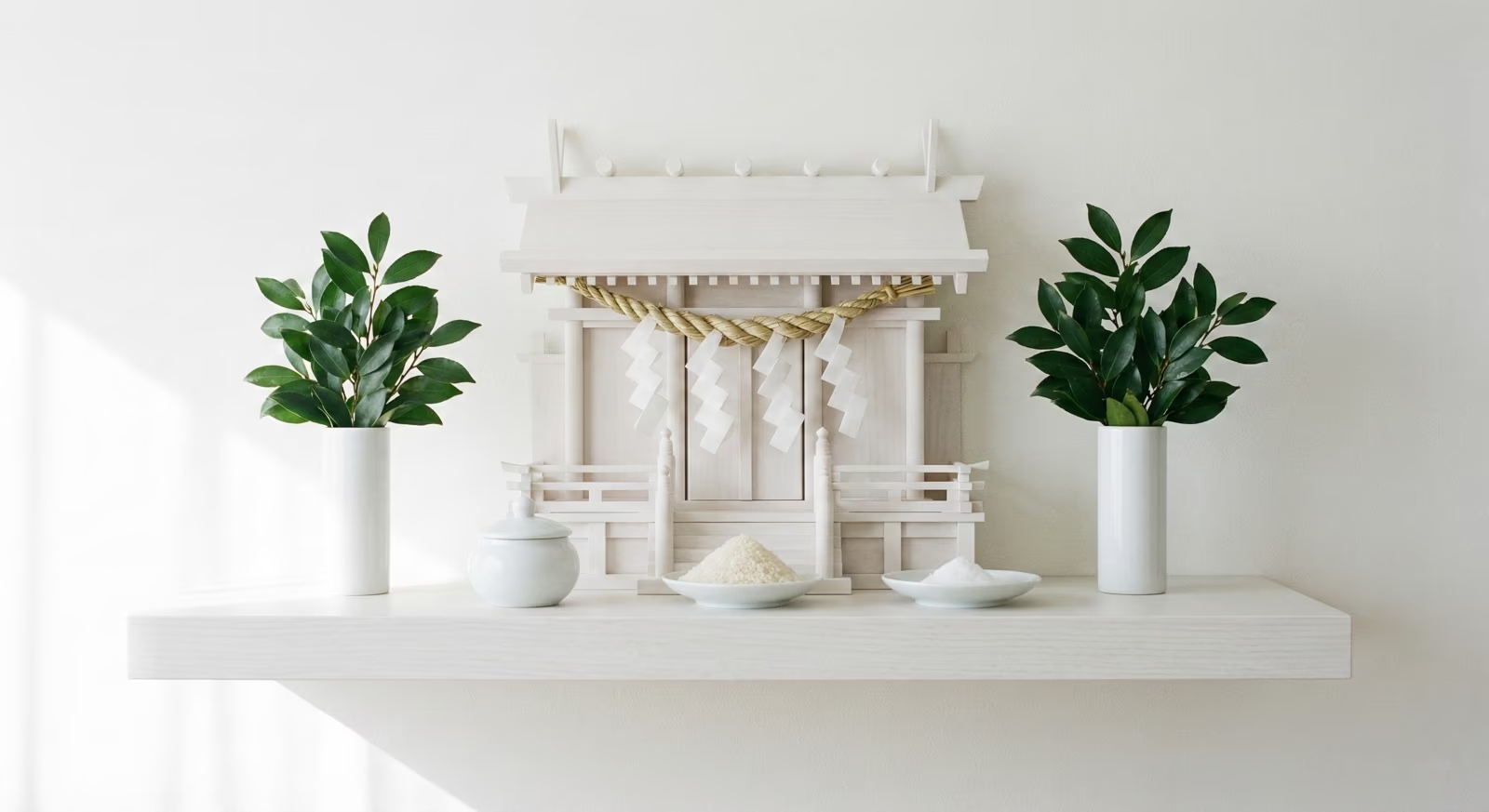
You've set up a kamidana (home shrine shelf), but now you're wondering: "What do I actually put on it? How should I arrange things? Do I need to change them every day?"
This guide covers the essentials — the three basic offerings, placement rules, and replacement timing — so you can start your practice with confidence, not confusion.
The Three Essential Offerings
The most important offerings for a kamidana are just three items, known collectively as "nikku" (日供) — daily provisions:
- Rice (kome): Washed uncooked rice, or a small portion of cooked rice. As Japan's staple food, it represents the most fundamental offering.
- Water (mizu): Fresh water in a clean vessel. Tap water is fine.
- Salt (shio): A modest amount on a clean dish. Details vary by local and shrine guidance.
That's it. Start with just these three. Offering with sincerity within your means matters far more than perfection.
The Spirit of Shinsen: Sacred Meanings of Rice, Salt, and Water
Food offered to the kami is called shinsen (神饌). The rice, salt, and water offered at a household kamidana are also shinsen. Serving the kami with food lies at the spiritual foundation of making offerings.
In Shinto tradition, the food and water that sustain daily life are revered as gifts of nature and divine blessings. Offering these staples first to the kami before partaking of them is a profound gesture of hospitality and gratitude.
Why Rice, Salt, and Water Are Offered
- Rice (Staple Grain & Gratitude for the Harvest): As Japan's staple food closely tied to rice cultivation, rice—offered either as washed uncooked grains or freshly cooked rice—expresses gratitude for the harvest and daily sustenance.
- Water and Salt (Essential Provisions for Life and Meals): Alongside rice, clean water and salt are fundamental provisions essential for sustaining life and preparing meals. Presenting them in clean vessels reflects the spirit of hosting the kami with everyday nourishment.
Meals offered daily to the kami are called nikku (日供). At shrines across Japan, priests present daily offerings during the Nikkusai ritual, offering prayers for local communities and universal peace. Tending a household kamidana follows this same unbroken spirit of reverence.
Shinjin Kyoshoku: The Gift of Blessed Food (Osagari)
After being presented at the altar, the offerings are reverently retrieved and consumed by the household. This communion—where humans eat food shared with the kami to receive renewed vitality—is known as shinjin kyoshoku (神人共食).
In physical home practice, offered rice is cooked into family meals and salt is used in cooking. Offering food with devotion and receiving it back with thanksgiving form a harmonious cycle of everyday mindfulness.
Placement Rules
When facing the kamidana:
- Center: Rice (the most important offering)
- Your right: Salt
- Your left: Water
If you add sake (sacred rice wine), place a pair of sake cups on either side of the rice. Sakaki (sacred evergreen branches) go in a pair of vases on the far left and right of the shelf.
Short on space? A single row is fine. What matters most is that the offerings are placed on clean vessels, in a clean space, with genuine care.
When to Replace
"Do I really need to change them every day?" This is the most common question. Here's a practical guide:
- Water: Every morning is the standard. This is the most important one to keep fresh.
- Rice & Salt: In traditional practice, refreshing them every morning is ideal. However, in busy modern homes, many people replace the water daily and change the rice and salt on the 1st and 15th of each month (or weekly). The essential principle is maintaining clean, unspoiled offerings at a pace you can genuinely sustain.
- Sakaki: Refresh the water regularly and replace the branches when they are no longer fresh (often refreshed on the 1st and 15th alongside other offerings).
- Sake: Remove the same day you offer it, or the next day.
Used offerings are called "osagari" (お下がり) — gifts from the kami to you. Cook with the rice, drink the water, use the salt. Nothing is wasted.
When Life Gets Busy
Let's be honest: changing the water every single morning is hard. Especially on days when you're running late or barely slept.
The most important thing isn't perfection — it's the intention to keep showing up.
Even on a hectic morning, offering a single cup of water and closing your eyes for a few seconds is a complete act of reverence. That counts.
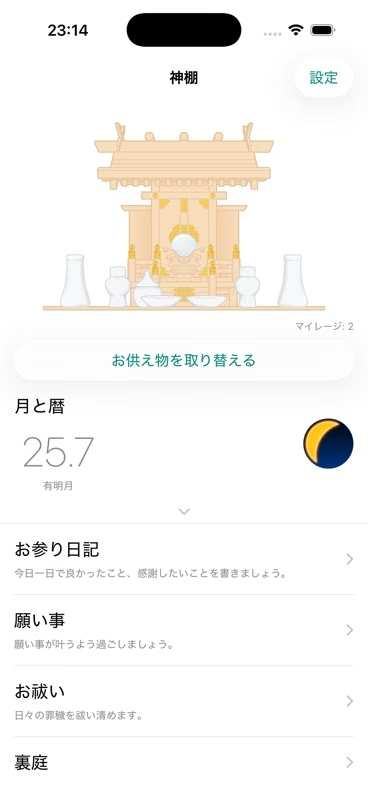
In the Kamidana App, the act of "exchanging offerings" is reimagined as a small daily ritual. You place digital offerings on a digital shelf. It takes seconds. But that tiny interruption in your routine creates a rhythm of stillness in an otherwise noisy day.
Summary: Consistency Over Perfection
Kamidana offerings have traditional guidelines, but the most important rule is simply: keep going.
- The three basics (rice, water, salt) are enough.
- Placement: center = rice, right = salt, left = water.
- Daily replacement is ideal, but refreshing water daily and rice/salt twice a month (1st and 15th) is a widely practiced modern rhythm.
- Used offerings are "osagari" — enjoy them with gratitude.
Don't aim for perfection. Aim for a "prayer habit" you can sustain at your own pace. That's the real art of living with a kamidana in the modern world.
Bring a moment of gratitude to your day
Place a digital offering in Kamidana, then take a quiet moment for gratitude. A small ritual for the times you want to return to what matters.
Editorial and sourcing policy
This guide uses guidance published by Jinja Honcho and Ise Jingu for kamidana offerings and arrangement. Types of offerings and replacement timing can vary by shrine, region, and household.