Kamidana Offerings Guide: What to Place, When to Replace, and How to Arrange
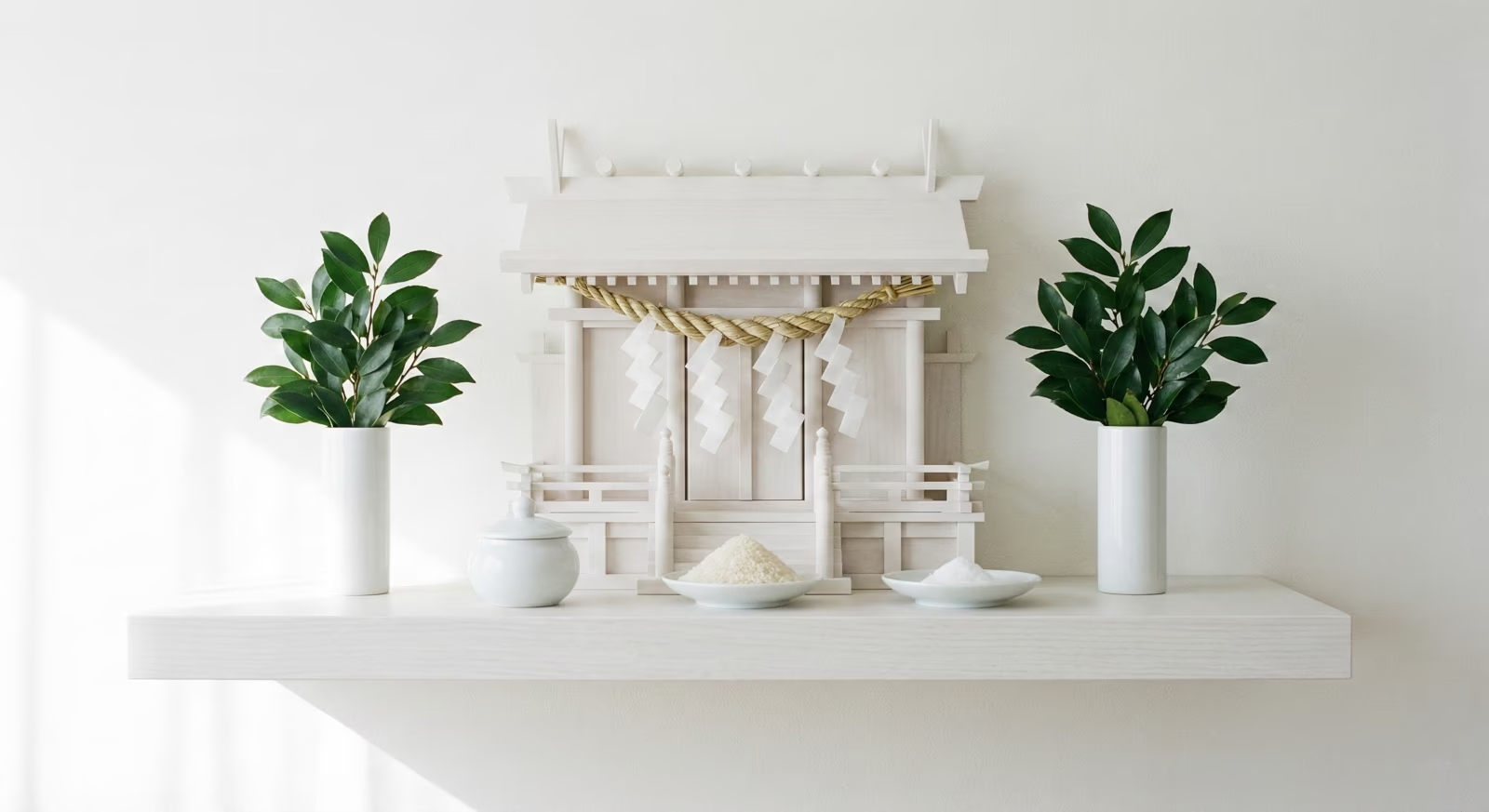
You've set up a kamidana (home shrine shelf), but now you're wondering: "What do I actually put on it? How should I arrange things? Do I need to change them every day?"
This guide covers the essentials — the three basic offerings, placement rules, and replacement timing — so you can start your practice with confidence, not confusion.
The Three Essential Offerings
The most important offerings for a kamidana are just three items, known collectively as "nikku" (日供) — daily provisions:
- Rice (kome): Washed uncooked rice, or a small portion of cooked rice. As Japan's staple food, it represents the most fundamental offering.
- Water (mizu): Fresh water in a clean vessel. Tap water is fine.
- Salt (shio): A modest amount on a clean dish. Details vary by local and shrine guidance.
That's it. Start with just these three. Offering with sincerity within your means matters far more than perfection.
Placement Rules
When facing the kamidana:
- Center: Rice (the most important offering)
- Your right: Salt
- Your left: Water
If you add sake (sacred rice wine), place a pair of sake cups on either side of the rice. Sakaki (sacred evergreen branches) go in a pair of vases on the far left and right of the shelf.
Short on space? A single row is fine. What matters most is that the offerings are placed on clean vessels, in a clean space, with genuine care.
When to Replace
"Do I really need to change them every day?" This is the most common question. Here's a practical guide:
- Water: Every morning is the standard. This is the most important one to keep fresh.
- Rice & Salt: Keep them clean and replace them before they spoil or become untidy. Timing varies by shrine, region, and household.
- Sakaki: Refresh the water regularly and replace the branches when they are no longer fresh.
- Sake: Remove the same day you offer it, or the next day.
Used offerings are called "osagari" (お下がり) — gifts from the kami to you. Cook with the rice, drink the water, use the salt. Nothing is wasted.
When Life Gets Busy
Let's be honest: changing the water every single morning is hard. Especially on days when you're running late or barely slept.
The most important thing isn't perfection — it's the intention to keep showing up.
Even on a hectic morning, offering a single cup of water and closing your eyes for a few seconds is a complete act of reverence. That counts.
In the Kamidana App, the act of "exchanging offerings" is reimagined as a small daily ritual. You place digital offerings on a digital shelf. It takes seconds. But that tiny interruption in your routine creates a rhythm of stillness in an otherwise noisy day.
Summary: Consistency Over Perfection
Kamidana offerings have traditional guidelines, but the most important rule is simply: keep going.
- The three basics (rice, water, salt) are enough.
- Placement: center = rice, right = salt, left = water.
- Replace daily if you can; twice a month if you can't.
- Used offerings are "osagari" — enjoy them with gratitude.
Don't aim for perfection. Aim for a "prayer habit" you can sustain at your own pace. That's the real art of living with a kamidana in the modern world.
Bring a moment of gratitude to your day
Place a digital offering in Kamidana, then take a quiet moment for gratitude. A small ritual for the times you want to return to what matters.
Editorial and sourcing policy
This guide uses guidance published by Jinja Honcho and Ise Jingu for kamidana offerings and arrangement. Types of offerings and replacement timing can vary by shrine, region, and household.