Separate What You Can Do from What You Can Watch Over: Kamidana App’s Four-Step Wish Design

A wish often contains two different things. One is the preparation and action available to you. The other is someone else’s decision, timing, or circumstance—something you cannot decide for them.
Kamidana App’s wish feature is more than a place to save a sentence. It helps you identify the feeling behind a wish, separate “Something I might be able to do myself” from “Something to watch over for now,” and choose one small step for today. This article explains the actual four-step flow through a concrete example.
A wish can mix action with waiting
Suppose you have submitted a proposal at work and are waiting for an answer. You may wish for it to be accepted, but the final decision belongs to someone else. You can still review what you sent, prepare for questions, or clarify a missing point.
If you do not separate these two areas, it becomes difficult to tell whether you should take another action or simply wait. But turning everything into a task is not the answer either: another person’s evaluation and timing are not yours to control.
For that reason, Kamidana App does not move directly from typing a wish to saving it. It offers four steps for sorting out what the wish contains.
The four steps for creating a wish
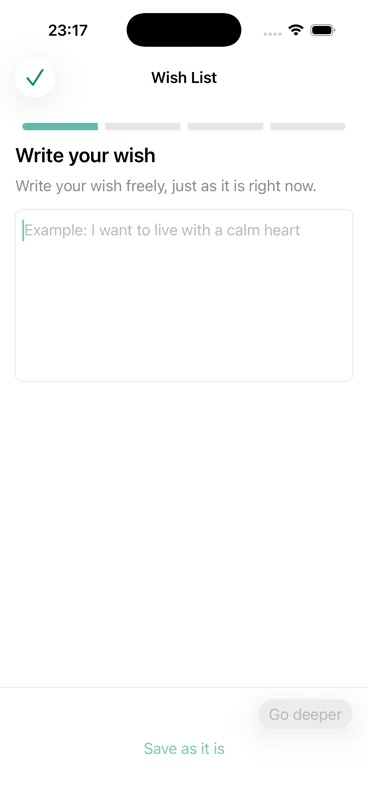
1. Write your wish
Start with what you hope will happen, in your own words. It does not need to be polished. In this example: “I hope the proposal is accepted.”
2. Identify the feeling behind it
Next, choose the feeling closest to what the wish means to you. The current flow includes “I want relief,” “I want to feel loved,” “I want confidence,” “I want to move forward,” and “I want to let go.”
Two people can write the same wish for different reasons. One may want confidence in their judgment; another may want relief after carrying responsibility. This step preserves more than the outcome alone.
3. Separate what you can do from what you can watch over
This is the center of the wish flow. The app provides two distinct fields:
Something I might be able to do myself
Review the submission and organize supporting material in case questions arrive.
Something to watch over for now
The other party’s evaluation, internal circumstances, and final decision.
“Watch over” does not mean avoiding responsibility. It names the part that remains outside your control after the necessary preparation has been done.
4. Add one thing you can do today
Finally, choose one action small enough to complete today: “Organize one page of supporting notes,” or “Wait until tomorrow morning, then follow up if there is no reply.”
This keeps the wish from remaining only a distant goal. The last step creates a clear way back into the day in front of you.
A saved wish can change without becoming a failure
A saved wish can move through “Engaging,” “Growing,” or “Watching.” When it reaches a conclusion, the available states include “Fulfilled,” “Released,” and “Transformed.”
Not every wish comes true in the exact form first written. A wish may stop being necessary or turn into a different goal. The status design lets that change remain part of the record instead of forcing every wish into a simple success-or-failure result.
The journal can hold events, progress, and gratitude along the way. Wishes are therefore not isolated from what happened before and after them: you can record what you did, what you waited for, and how the outcome changed your understanding.
Why a kamidana instead of a task manager?
A task manager is useful for deadlines, ownership, and work you can complete. A wish always has a remainder: even after careful preparation, part of the outcome may still depend on another person or on timing.
In Kamidana App, you can refresh the offerings, place a wish, and use the journal to reflect later. There is no public feed where a wish needs to attract a reaction. The product gives both action and uncertainty a place without pretending they are the same kind of problem.
There are also elements that make returning enjoyable. Seven consecutive offering changes unlock a nighttime lighting effect, and completing an offering can send the fox in the backyard on a journey. These are private product experiences, not a public ranking of how many wishes you have completed.
What happens after you save the wish?
After saving, read the one action you chose for today. Then close the app and do it. In the proposal example, you might organize the supporting material and then leave the final evaluation with the other party.
The act of writing is not the final achievement. The wish helps locate the boundary of your responsibility: act where you can, and watch over what you cannot decide. Kamidana App’s four-step design makes that distinction usable in daily life.
Kamidana App
Sort the wish. Take the step that is yours. Leave space for what you can only watch over.