No Room for an Ofuda? Modern Shinto Altar Ideas for Apartments and Rentals
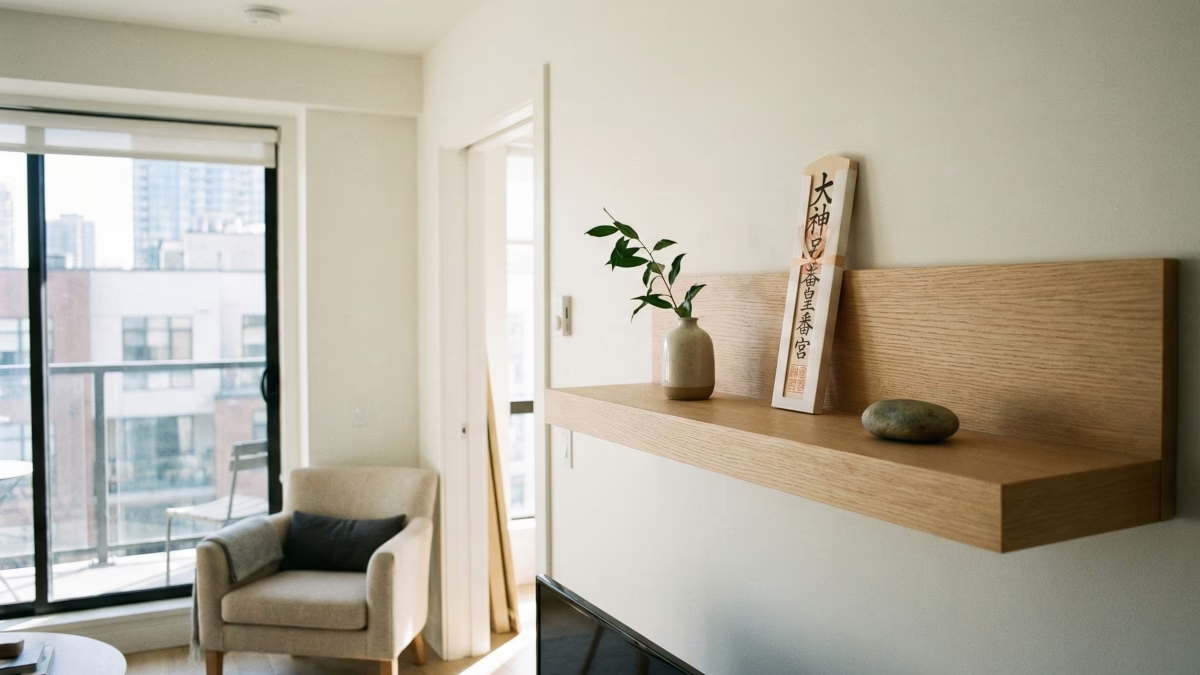
When you visit a Shinto shrine, you may receive a sacred talisman known as an "Ofuda." Once you bring it home, have you ever struggled with "no space to enshrine it," "not being allowed to put holes in the walls," or "it doesn't match the interior"?
Even if it's difficult to set up a traditional Kamidana (household altar), the most important thing is your sincerity and respect. Let’s explore new ways to honor your Ofuda that fit modern lifestyles, and the "digital choice" that lies ahead.
1. Why Is Finding a Spot So Hard? Modern Housing Realities
In traditional Japanese homes, Kamidana and Buddhist altars were a natural part of the layout. However, in today's modern apartments or rentals, it’s not that simple.
- Lack of Space: No room for a dedicated large shelf.
- Rental Restrictions: Rules against drilling screws into walls.
- Design Mismatch: Traditional wooden altars can look out of place in a modern living room.
Still, leaving your Ofuda in a drawer or a paper bag feels a bit disheartening, doesn’t it?
2. Rental-Friendly Ideas for Modern Altar Styles
Today, there are many ways to honor your Ofuda without needing a massive setup.
- "Stick-on" Style: Use adhesive parts or magnetic holders that don't damage the walls.
- "Shelf" Style: Clear a corner of a bookshelf, lay down a clean white cloth, and create a "simplified altar."
- "Modern Kamidana": Choose simple, wood-grain designs that blend in with minimalist furniture.
The key is following a few basic traditions—such as placing it at eye level or higher and facing South or East—while making it a natural part of your daily life.
3. Apartment Living: The "Cloud" (Kumo) Character & Places to Avoid
In multi-story apartments and houses, people often worry about neighbors or family members walking on the floor above the altar.
The Wisdom of the "Cloud" (雲, Kumo) Ceiling Inscription
When there is living space above your altar, Japanese tradition offers a gentle solution: affixing a piece of white washi paper with the kanji for "Cloud" (雲, kumo), "Heaven" (天, ten), or "Sky" (空, sora) to the ceiling directly above the kamidana. This symbolizes that "above this altar lies only the open sky, unobstructed by human feet." It reflects a considerate, respectful heart without imposing impossible architectural demands on apartment living. Affix it so the top of the character faces the same direction the altar faces (South or East).
Placement Mistakes to Avoid
- Mukai-matsuri (Facing Altars): Placing a kamidana and a Buddhist altar (butsudan) directly facing each other in the same room. Bowing to one would place your back toward the other, which is traditionally avoided. (Placing them on the same wall or side-by-side is fine).
- Directly Above Doors: Avoid mounting the altar directly above doors where people constantly pass underneath and vibrations disturb the stillness.
- Walls Shared with Toilets: Avoid mounting the altar directly against a wall shared with a bathroom or plumbing.
4. The Third Option: The "Digital Kamidana" Habit
While treasuring the physical Ofuda is important, there is a new way to practice Shinto traditions in the modern era: The Kamidana App.
No matter how carefully you enshrine it, it’s easy to forget to take a moment for reflection when you're busy or away from home.
The Concept of "Carrying Your Altar in Your Pocket"
With the Kamidana App, you can take a photo of your Ofuda and register it as a "Digital Kamidana." This creates a new form of prayer that completely transcends physical space constraints.
5. Finding Mindfulness Through the App
The app offers an experience that goes beyond being just a "replacement" for a physical altar.
- Prayer Anywhere, Anytime: Whether on a commuter train or traveling abroad, open the app and you have a quiet place for prayer.
- Self-Reflection with the Journal: After praying, jot down a short note of gratitude or a wish. Reading these back helps you notice shifts in your own heart.
- Reminders to "Recall": Amidst a noisy day, the app provides a gentle nudge to reclaim a moment of silence.
6. Conclusion: Sincerity Over Form
Not having a traditional altar doesn't mean you have to neglect your Ofuda. By using modern tools to house it physically and a mobile app to "recall" its presence daily, you can keep the connection alive.
Instead of letting "lack of space" be a reason to give up, use digital tools to keep Japanese traditions closer to you.
Why not start your own small "habit of prayer" in a way that fits your lifestyle?
A modern sanctuary that fits your space
You don't need a traditional wooden shelf to hold reverence in your home. Bring the spirit of kamidana into your daily rhythm with a quiet digital space for prayer, offerings, and gratitude.
Editorial and sourcing policy
This guide references guidance published by Jinja Honcho and Ise Jingu for kamidana placement and ofuda. Placement varies with the home, and published shrine guidance can be followed where available.