Daily Kamidana Prayer & Gratitude: Why We Bow Even on Ordinary Days Without a Special Request
New Year's festivities, major life milestones, or times of urgent distress: these are the moments when people most commonly visit shrines with fervent requests in their hearts.
Yet the quiet tradition of worshiping before a household kamidana (home shrine shelf) is not reserved solely for those rare, monumental occasions.
What about the days when you have no urgent crisis or dramatic wish? Days when the morning arrives as usual, family members set off for work or school, and the evening winds down in unremarkable peace?
In Shinto tradition, it is precisely within these "ordinary days" that the true depth of worship comes alive. Worshiping at a household kamidana carries the meaning of giving thanks for the blessings of the kami supporting our daily lives, and praying for peace throughout the day. It is a devotion practiced in the flow of ordinary life, not reserved solely for times when one has great wishes.
Why We Bow on Ordinary Days: Finding Grace in the Unremarkable
Days without major trouble or unexpected windfalls are often dismissed as routine or uninteresting.
Yet when we wake up with health in our limbs, share a warm meal, carry out our daily responsibilities, and return home in safety, that very ordinariness is supported by a quiet web of countless blessings.
Recognizing the Foundation of Daily Existence
Our livelihood is continually sustained by nature's provisions, public infrastructure, and the unseen labor of people around us.
As documented in teachings from Jinja Honcho and the Hokkaido Jinja Cho, the very core of home kamidana practice is shin'on kansha (gratitude for divine blessings). Even when there is no special plea to make, simply pausing before the altar to whisper, "Thank you for welcoming this new morning in safety," awakens an appreciation for the subtle gifts already in our hands.
Recognizing the beauty of an uneventful day transforms ordinary routines into a source of quiet joy and inner stability.
Gratitude and Future Protection: The Unified Spirit of Shinto Norito
In traditional Shinto liturgies (norito), words of praise and thanks for past blessings are woven seamlessly together with prayers for ongoing protection and community harmony.
Gratitude and Supplication Belong Together
Expressing gratitude to the kami and praying for future protection can be done within the very same prayer.
Expressing gratitude for the protection experienced so far and praying for the days ahead can naturally exist side by side, supporting a quiet sense of balance in daily life.
What you convey in daily prayer is not limited to answered wishes. That your family spent the day in safety, that daily meals could be enjoyed, and that work and daily livelihood could be sustained—all of these are subjects of gratitude. Naming these simple realities brings warmth and wholeness to the soul.
Morning and Evening Rhythms: Gentle Boundaries for a Busy Mind
Modern living inundates us with nonstop digital stimulation, deadlines, and news. Without realizing it, our nervous systems remain trapped in high gear.
Taking just a few seconds to stand before a kamidana in the morning and evening carves out a serene sanctuary in the architecture of your day.
A Moment of Stillness to Open and Close the Day
In the morning, washing your hands, offering fresh water, and performing two bows, two claps, and one bow sets a clear, peaceful intention for the day ahead. In the evening, pausing to say "thank you for guiding us through today" allows you to release the day's stress before resting.
This simple physical gesture requires no complex doctrine or hours of silent meditation. By gently straightening your posture and folding your hands, your outward attention returns to your inner sanctuary.
To learn more about the basic items and arrangement of daily offerings, explore our comprehensive guide:
👉 Kamidana Offerings Guide: What to Place, When to Replace, and How to Arrange
Expressing Daily Gratitude with the Kamidana App's Prayer Journal
Because of compact modern apartments or busy schedules, maintaining a physical wooden shrine shelf with fresh offerings daily is not always feasible for everyone.
The Kamidana App was created to offer a private, modern sanctuary where you can honor these timeless rituals right from your smartphone.
Quietly Record the Small Realities of Today
In the Kamidana App, you can replace digital water offerings, bow in quiet reverence, and use the Prayer Journal to record your thoughts.
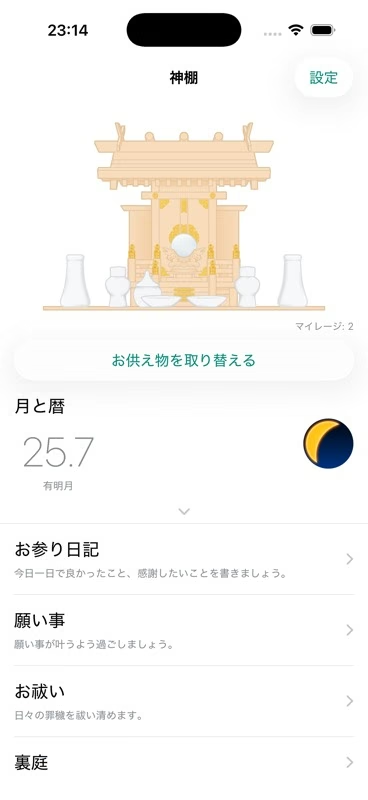
In the app's Prayer Journal, you can record what you are grateful for separately from what you hope for in the future. On days when nothing out of the ordinary occurred, you can simply report on the day's ordinary life—that everyone was healthy, or that dinner was comforting.
If you face hardships or seek continued protection, you can share those with the kami as well. By anchoring your days in quiet reflection and thankfulness, you cultivate an enduring peace that gently shields your spirit.
A Simple, Grounded Practice for Busy Modern Lives
With the Kamidana App, you can place quiet wishes and daily reflections directly on your smartphone. Build a steady rhythm of gratitude and calm integrity—without requiring a large traditional altar or complicated rituals.
Editorial & Sourcing Policy
This article references traditional practices of household kamidana worship, morning/evening prayer etiquette, and norito liturgies published by Jinja Honcho and the Hokkaido Jinja Cho. Daily prayer can be adopted naturally into your personal lifestyle without rigid pressure.