Makoto (Sincerity) in Shinto Prayer: Connecting Quiet Wishes with Daily Effort and Integrity

When we hold a cherished aspiration in our hearts—passing an important examination, bringing a new creative endeavor to fruition, or supporting someone we care about—we naturally seek a moment of quiet focus and prayer.
Holding an honest wish is a noble reflection of our desire to engage meaningfully with the future and care for those around us.
Yet at times, holding a wish can also bring subtle waves of restlessness or worry: "Is wishing enough? What should I actually do right now?"
In traditional Shinto thought, praying before the sacred and engaging diligently in everyday responsibilities are never treated as separate worlds. Instead, they form a single, continuous practice. By understanding the ancient ideal of makoto (sincerity) and the traditional prayers of the kamidana, we can find a grounded way to unite quiet prayer with steady, honest daily action.
What Is "Makoto" (Sincerity) in Shinto Tradition?
At the philosophical core of Shinto worship lies the timeless ideal of "akaki, kiyoki, naoki, makoto no kokoro" (a bright, pure, upright, and sincere heart).
This concept represents the foundational ethical and spiritual compass cherished by people in Japan across generations.
Approaching Life Without Pretense
Here, a "bright heart" (akaki kokoro) signifies a mind free from gloomy shadows; a "pure heart" (kiyoki kokoro) denotes an attitude unclouded by selfish greed; an "upright heart" (naoki kokoro) represents honesty without distortion; and makoto represents an attitude of facing matters without pretense, with an honest and true heart.
When standing before a shrine or a household altar, there is no requirement to present an exaggerated, flawless version of oneself. Acknowledging our vulnerabilities, our real limitations, and offering our genuine, unvarnished intentions to the kami is where true sincerity begins.
When you reflect upon a wish and return to the simple truth beneath it—the honest wish to protect family, improve one's craft, or be useful to others—the noisy pressure of overthinking softens into calm clarity.
Prayer and Daily Duty in the Kamidana Haishi
One of the primary liturgies recited before household shrine shelves is the Kamidana Haishi (kamidana prayer words).
As documented in teachings by shrine associations such as Jinja Honcho and Hokkaido Jinja Cho, the Kamidana Haishi expresses profound gratitude for divine blessings, asks to work diligently with a right heart in daily duties, and seeks the wisdom to serve others and society.
Prayer Beyond Demanding Results
What is most striking about the Kamidana Haishi is that it does not merely plead for external outcomes or fortune to be handed down effortlessly.
Rather, after giving thanks for the blessings that sustain life each day, the worshiper reflects upon how to approach their own daily responsibilities with integrity and harmony. Prayer before the kami encompasses not only the desired outcome, but also how one approaches one's own daily responsibilities.
Fulfilling daily work, keeping promises to colleagues and family, and expressing quiet reverence are seen as parts of the same continuous devotion. Prayer is not an escape from daily reality; it is the calm foundation from which we return to our everyday duties with renewed dedication.
Connecting Wishes to Daily Action
To prevent wishes from turning into passive anxiety, it is deeply helpful to untangle the outcome we desire from the practical steps that lie within our direct influence.
Separating the Wish from Your Immediate Step
If you pray to pass an examination, the final result is the wish; deciding which specific chapters to review today is your personal action. If you pray for success in a business project, the outcome depends on many moving pieces; conducting thorough research, communicating clearly, and treating partners respectfully are your personal actions.
Writing down the wish itself separately from what you will do toward it helps clarify what to work on today. It takes the heavy weight of an uncertain future and transforms it into an approachable, tangible task for this morning or afternoon.
While diligent effort does not guarantee total control over the external world, focusing on what you can genuinely do with sincerity brings a grounded peace that fear can never offer.
Cultivating Sincerity in Modern Life with the Kamidana App
In a fast-paced modern routine, noble intentions and sincere commitments can easily get swallowed by daily demands and constant notifications.
The Kamidana App is designed as a peaceful sanctuary on your smartphone to help you pause, reconnect with quiet reverence, and align your wishes with small, mindful steps.
Clarify Your Wish and Choose One Step for Today
When recording a wish within the Kamidana App, you articulate what you hope to achieve, alongside selecting one practical step you can take today.
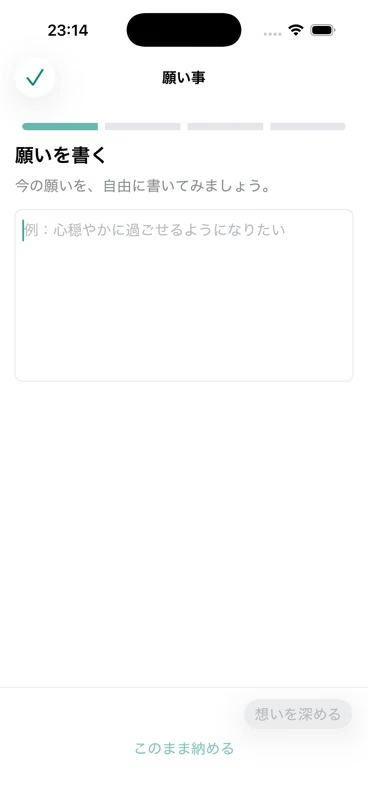
You don't need a grand, overwhelming master plan. A single small gesture—reading one article, sending a polite email, or preparing a meal with care—is more than enough.
During daily worship, you can confirm what you have done and what still remains. If your circumstances evolve or your goals naturally shift over time, you can gently review your approach without guilt.
By bringing an honest heart before the kami and cultivating small, faithful practices day by day, the Kamidana App supports a life rooted in quiet integrity and steady inner peace.
A Simple, Grounded Practice for Busy Modern Lives
With the Kamidana App, you can place quiet wishes and daily reflections directly on your smartphone. Build a steady rhythm of gratitude and calm integrity—without requiring a large traditional altar or complicated rituals.
Editorial & Sourcing Policy
This article references explanations of traditional Shinto prayers (Kamidana Haishi) and core virtues published by Jinja Honcho and the Hokkaido Jinja Cho. Household worship and personal prayer practices can be adapted naturally according to your personal circumstances and family traditions.