Japanese Auspicious Days Guide: Ichiryumanbaibi, Tenshanichi, and Rokuyo (Taian & Butsumetsu)

Look at a Japanese wall calendar or appointment book, and you will likely notice subtle markings beside each date: Taian, Butsumetsu, Ichiryu Manbai-bi, Tenshanichi.
When opening a new business, buying a wallet, planning a wedding, or embarking on a major life endeavor, people in Japan frequently check these markings to choose an auspicious day (kichijitsu).
What do terms like Ichiryu Manbai-bi actually mean? How should we interpret days marked as inauspicious (kyojitsu) like Butsumetsu or Fujojubi? And what should you do when a lucky day and an unlucky day fall on the exact same date? Here is a practical, grounded guide to navigating Japan’s calendar wisdom without fear or superstition.
1. What Are Auspicious and Inauspicious Days? Understanding Rekichu
Throughout history, Japanese calendars have included annotations indicating fortune, suitable actions, and seasonal warnings. These notes are collectively called rekichū (暦注, calendar annotations).
- Kichijitsu (吉日 - Auspicious Days): Regarded as favorable for taking action, starting ventures, sowing seeds, celebrating unions, or embarking on journeys.
- Kyojitsu (凶日 - Inauspicious Days): Regarded as days calling for caution, restraint, self-reflection, or pausing major celebrations.
Popular systems like the Rokuyo (六曜)—which cycles through six days including Taian and Butsumetsu—originated in China, were transmitted to Japan around the 14th century, and spread widely in popular calendars from the end of the Edo period (Bakumatsu) onward. While not part of formal Shinto doctrine, they remain widely used in daily life as familiar benchmarks for choosing dates.
Crucially, calendar annotations were never created to cast curses or predict unavoidable doom. They were preserved across generations as mindful benchmarks to help people pause, plan thoughtfully, and act with deliberate respect.
2. Major Auspicious Days: Ichiryu Manbai-bi, Tenshanichi, and Taian
When choosing a date to launch an endeavor or set a meaningful intention, several key auspicious days stand out:
Ichiryu Manbai-bi (一粒万倍日)
The phrase translates to "a single grain of rice multiplying ten-thousandfold into a rich harvest."
Rooted in agrarian imagery, it signifies that small beginnings can grow into abundant fruition. It is widely favored as a day for starting new projects, launching businesses, buying or using a new wallet, or setting a sincere intention for a new endeavor.
What to Avoid on Ichiryu Manbai-bi:
Because the principle of this day is "multiplication," popular belief holds that negative actions multiply just as easily as positive ones. Therefore, taking on new debts, borrowing money or items, or engaging in unnecessary quarrels and conflicts are traditionally cautioned against, as these burdens could compound ten-thousandfold. Plant seeds of positive intention, and avoid sowing seeds of regret.
Tenshanichi (天赦日)
Described in traditional calendar annotations as the day when "the myriad deities assemble in heaven and heaven pardons all things," Tenshanichi is regarded as auspicious for all undertakings.
Determined by the combination of the four seasons and the sexagenary cycle (jikkan junishi)—falling on Tsuchinoe-Tora in spring, Kinoe-Uma in summer, Tsuchinoe-Saru in autumn, and Kinoe-Ne in winter—it is cherished as a meaningful milestone to start long-delayed ambitions or take a fresh step forward.
Taian (大安)
The most famous day of the six-day Rokuyo cycle, meaning "great peace and security." Considered favorable for all activities without restriction, Taian is traditionally favored for weddings, official ceremonies, moving into a new home, and installing a household kamidana.
3. Inauspicious Days & Overlaps: Butsumetsu, Fujojubi, and Hourly Cycles
Encountering an inauspicious marking does not mean the day is cursed. Understanding the nuanced meaning of these days frees you from unnecessary anxiety.
Butsumetsu and Fujojubi
- Butsumetsu (仏滅): Traditionally interpreted as a day when material things decline, leading people to avoid festive celebrations like weddings. However, it has also been viewed positively as a day for concluding unproductive habits or holding quiet memorial services.
- Fujojubi (不成就日): Meaning "a day when matters do not achieve completion." It is simply considered unsuited for rushing major contracts. In modern life, it serves as an ideal reminder to slow down, rest, review plans, and organize files rather than forcing hasty outcomes.
Fortune by the Hour
Many calendar markers divide fortune according to the hour rather than the whole day:
- Shakko (赤口): Calls for care around heat and sharp tools, but the midday window (approx. 11 a.m. to 1 p.m.) is considered auspicious.
- Sensho (先勝): "Good fortune to the swift." Favorable in the morning, cautious in the afternoon.
- Senbu (先負): "Patience brings peace." Cautious in the morning, favorable in the afternoon.
What If Lucky and Unlucky Days Overlap?
It is common for an auspicious day (such as Ichiryu Manbai-bi) to coincide with an inauspicious marker (such as Fujojubi).
There is no universal mathematical formula or strict rule across shrines for calculating which marker "wins." Some traditions emphasize the positive energy of the auspicious day, while others recommend postponing if you feel uneasy. The most important guideline is your own inner peace: choose whatever decision allows you to proceed with a calm, confident heart.
4. Empowering Action: Recording Intentions with the Kamidana App
The healthiest way to live with the calendar is to treat it as an encouraging companion that offers gentle encouragement, rather than an anxious constraint.
Using Auspicious Days to Overcome Procrastination
We often delay meaningful steps—beginning a daily walk, learning a skill, or reaching out to an estranged friend. An auspicious day can serve as the gentle catalyst you need:
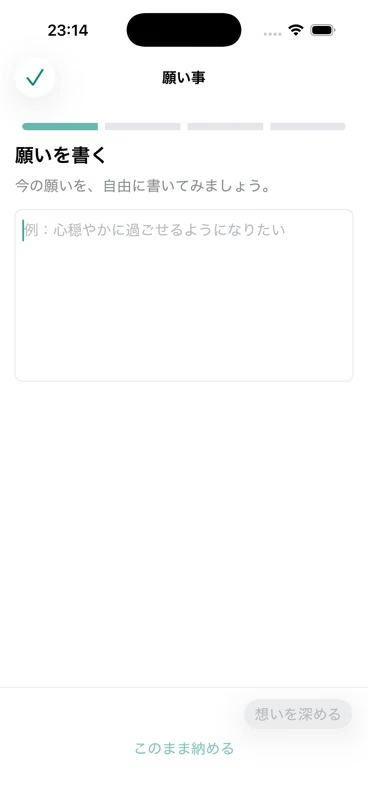
Open the Kamidana App, offer a fresh cup of digital water, and use the wish feature to record your commitment: "On this Ichiryu Manbai-bi, I commit to taking one small step toward my health." Anchoring your choice in a sacred date transforms vague wishes into concrete, heartfelt actions.
Prioritizing Real-World Harmony
In Shinto thought, true harmony (wa) always takes precedence over calendar charts. If scheduling an event on an auspicious day inconveniences family members or forces unfair sacrifices on coworkers, it ceases to be truly auspicious. A date that accommodates everyone’s well-being and smiles is always the most blessed day of all.
5. Summary: A Peaceful Compass for Intentional Living
Auspicious and inauspicious days are not rigid laws; they are poetic signposts inherited from ancestors who lived in close observation of nature’s balance.
- Auspicious days (Ichiryu Manbai-bi, Tenshanichi, Taian) provide an encouraging push for fresh starts.
- Inauspicious days (Butsumetsu, Fujojubi) offer valuable prompts to pause, rest, and review plans with care.
- When dates conflict, choose the path that brings calm and clarity to your mind.
- Always harmonize calendar wisdom with real-world kindness toward those around you.
Use the calendar to enrich your rhythm, nurture your intentions, and step forward with confidence. Every day lived with sincerity and care holds the potential to become a truly good day.
Bring a moment of quiet gratitude to your day
Want to align your personal goals with Japan’s mindful calendar rhythms? The Kamidana App provides a calm, beautiful space to record your prayers, dedicate intentions on auspicious days, and reflect on your growth. Begin your quiet ritual today.
Editorial and sourcing policy
This guide references historical research on traditional Japanese calendar systems, Rokuyo, and Rekichu published by the National Diet Library (NDL) and educational Q&A resources from the Akita Prefecture Jinja-cho. Calendar interpretations and customs vary across regional communities and shrines.