How to Set Up a Kamidana: A Complete Beginner's Guide
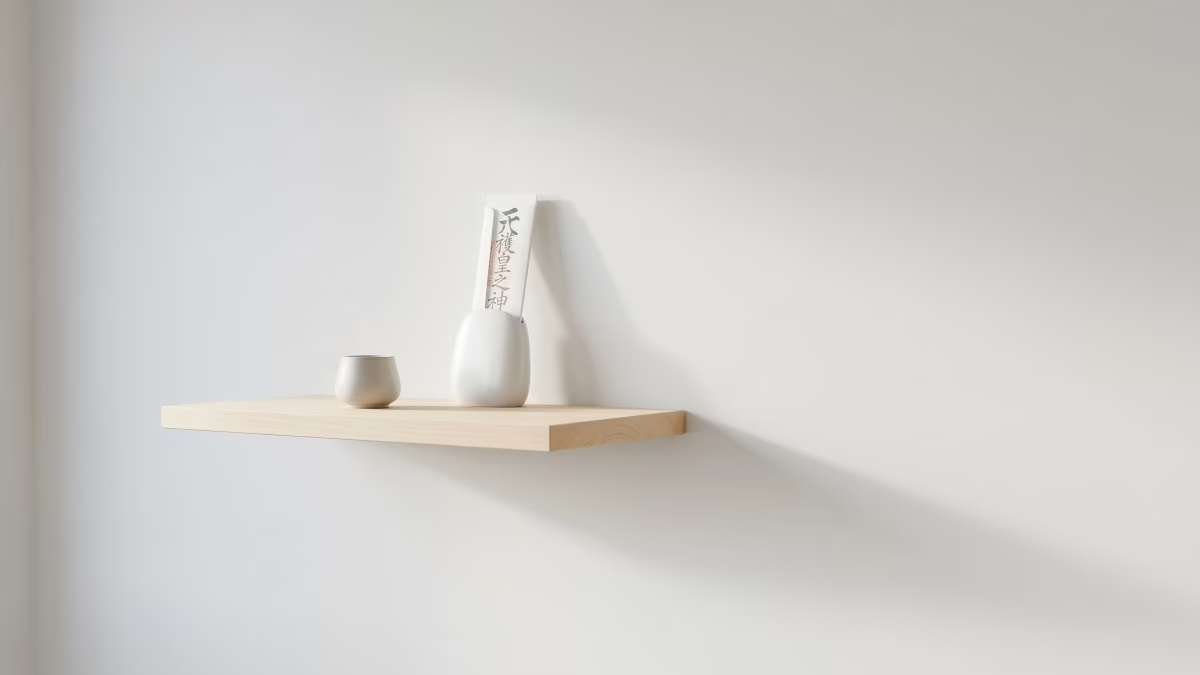
A kamidana (神棚) is a small household altar found in many Japanese homes. Literally meaning "shelf of the gods (kami)," it serves as a focal point for daily Shinto practice — a place to offer gratitude, welcome the morning, and maintain a quiet connection with something beyond the daily rush.
If you've received an ofuda (a sacred talisman), are exploring Japanese culture, or simply feel drawn to the idea of a dedicated space for daily intention, this guide will walk you through everything you need to know.
What You Need (and What You Don't)
A traditional kamidana setup includes several specific items. But the spirit of the practice matters more than the equipment — many people begin with just one or two elements and add to it over time.
The Core Items
| Item | Purpose | Required? |
|---|---|---|
| 棚板 (Tanaita) — the shelf itself | The physical platform for the kamidana | Yes (any clean, stable shelf works) |
| 宮形 (Miyagata) — shrine cabinet | A miniature shrine housing for ofuda | Optional for beginners |
| 御札 (Ofuda) — sacred talisman | The primary sacred element; received at a shrine | Traditional center of the kamidana |
| 水玉 (Mizutama) — water vessel | For fresh water offerings | Essential for daily practice |
| 瓶子 (Heishi) — sake vessels | For sake offerings (two are used) | Traditional; a small cup works too |
| 米 (Kome) — rice | Daily food offering | Traditional |
| 榊 (Sakaki) — sacred evergreen | Placed on both sides; renewed twice monthly | Traditional; a small plant works |
| 灯明 (Tōmyō) — candle or light | Symbolizes the presence of kami | Optional |
Beginner's minimum: a clean shelf, a glass of fresh water, and a quiet moment each morning. That is the heart of the practice.
Where to Place a Kamidana
Placement is one of the most common questions, and also one of the most flexible aspects of the practice. Here are the traditional guidelines:
Traditional Guidelines
- Height: Place the kamidana at or above eye level — historically mounted high on a wall, where it would be seen from below rather than looked down upon
- Direction: Face it south or east, toward the light
- Location: A clean, central room — traditionally the living room or a room where the family gathers
- Avoid: Placing it directly facing a toilet or bathroom, or in a position where it looks down into a disrespectful space
For Modern Apartments
Most of these guidelines can be adapted. If you live in an apartment without a traditional shelf, a clean bookshelf, a wide windowsill, or a dedicated corner of a sideboard all work well. The key is consistency and intention — a dedicated space that you return to each day.
If south or east placement isn't possible, choose whatever direction feels natural in your space. The direction is a guideline, not a requirement.
How to Arrange the Ofuda
The traditional arrangement for ofuda inside a kamidana follows a specific order of precedence. If you have multiple ofuda, place them as follows:
- Center (or innermost position): The ofuda from Ise Jingu (Jingu Taima) — the central shrine of Shinto, representing Amaterasu, the sun deity
- Right side: The ofuda from your local ujigami shrine — the tutelary shrine of the area where you live
- Left side: Any additional ofuda from other shrines you have visited or feel connected to
If you have only one ofuda, place it in the center. For a detailed guide on handling and displaying ofuda, see our complete ofuda guide.
Daily Practice: The Morning Omairi
The word omairi (お参り) means "to visit and pay respects." In a household context, it refers to the brief morning ritual at the kamidana. There is no single correct form — any sincere, consistent practice counts.
A Simple Daily Sequence
- Replace the water: Remove yesterday's water offering and replace it with fresh water first thing in the morning
- Bow twice: Stand before the kamidana and bow twice deeply
- Clap twice: Bring your hands together and clap twice
- Moment of quiet: Hold your hands together and spend a moment in stillness — expressing gratitude, noticing the day beginning, or simply being present
- Bow once more: One final bow to close
This entire sequence takes about 60 seconds. It does not need to be longer to be meaningful.
When to Change Offerings
| Offering | How Often to Change |
|---|---|
| Water (水) | Every morning |
| Rice (米) | Every morning, or every 1st and 15th of the month |
| Sake (酒) | Every 1st and 15th of the month |
| Salt (塩) | Every 1st and 15th of the month |
| Sakaki branches | Every 1st and 15th of the month |
For more details on what to offer and how to arrange each item, see our complete osonae (offerings) guide.
Common Questions
Do I need to be Shinto to have a kamidana?
No. Many people who maintain a kamidana do not identify formally as Shinto practitioners. The kamidana is a cultural and personal practice — a form of attention and gratitude — rather than a doctrinal commitment.
What if I travel or miss a day?
Missing days is entirely normal and carries no negative consequence. If you travel, remove perishable offerings before you leave, and resume when you return. Consistency over time matters more than perfection each day.
Can I use a digital kamidana?
If you live in a small space, travel frequently, or simply prefer a quieter visual environment, a digital practice can serve the same function — a dedicated space to open each morning, offer a moment of attention, and begin the day with intention. The Kamidana App was built for exactly this purpose.
Kamidana App
Whether you have a physical kamidana or are exploring the practice for the first time, the Kamidana App provides a quiet digital space for your daily omairi — fresh offerings, a moment of stillness, and a gentle way to begin each morning.