Nijushisekki & Shichijuniko: Japan's 24 Solar Terms and 72 Micro-Seasons in Daily Prayer
There are moments when a sudden shift in the breeze, the changing hue of the late-afternoon sky, or the scent of damp fallen leaves whispers that the seasons have turned.
In Japan, the year is not merely divided into four broad seasons. Through centuries of keen observation, the natural world was calibrated into the 24 solar terms (Nijushisekki) and further into 72 micro-seasons (Shichijuniko). Rather than viewing nature as a backdrop, this calendar treats the earth as a living rhythm—offering regular milestones to refresh gratitude, reflect on personal goals, and steady the heart.
This guide introduces the origins and structure of these micro-seasons, showing how their gentle pace can inspire a grounded prayer and mindfulness practice in modern life.
The 24 Solar Terms (Nijushisekki): Natural Milestones of the Sun
The 24 solar terms (Nijushisekki) are seasonal markers that divide the sun's annual path along the ecliptic (360 degrees of apparent solar longitude) into twenty-four segments of 15 degrees each—corresponding to roughly fifteen days per term, though the exact number of days varies slightly across the year because Earth's orbit is elliptical. Crucially, they are determined by the sun's movement, not by the phases of the moon.
Familiar terms like Risshun (Beginning of Spring), Shunbun (Spring Equinox), Geshi (Summer Solstice), Shubun (Autumn Equinox), and Toji (Winter Solstice) are all cornerstones of this system:
- Spring and Autumn Equinoxes: Days when the sun rises due east and sets due west, making daytime and nighttime of roughly equal length.
- Summer Solstice: In the Northern Hemisphere (including Japan), the day with the longest period of sunlight, when the sun reaches its highest midday altitude.
- Winter Solstice: In the Northern Hemisphere, the day with the shortest daylight and longest night, marking the turning point when daylight begins to lengthen again.
Counting twelve lunar cycles alone (roughly 354 days) falls about 11 days short of a solar year (roughly 365 days). In Japan's historic lunisolar calendar (kyureki), the 24 solar terms served as an indispensable solar reference so agricultural tasks—such as rice planting and harvesting—stayed aligned with the seasons, helping calendar keepers know when to insert a leap month (uruuzuki) every few years.
The 72 Micro-Seasons (Shichijuniko): Whispers of Nature Every Five Days
To capture the natural world even more intimately, each of the 24 solar terms is divided into three parts: early, middle, and late. This creates the 72 micro-seasons (Shichijuniko), each lasting approximately five days.
What makes the 72 micro-seasons so poetic and enduring is that their names describe specific, tangible phenomena observed in flora, birds, insects, and weather.
Around the Spring Equinox, for instance, the micro-seasons progress through Suzume hajimete sukuu ("sparrows begin to nest"), Sakura hajimete hiraku ("cherry blossoms begin to open"), and Kaminari sunawachi koe o hassu ("distant thunder resounds").
Originally introduced from ancient China, the micro-season names were adapted during the Edo and Meiji periods by Japanese astronomers and scholars—such as Shibukawa Harumi—to reflect Japan's native climate, fauna, and flora. Tuning into a world that changes every five days nurtures a deep reverence for life's fleeting moments.
Seasonal Milestones and Personal Reflection Across the Year
In Japanese culture, everyday life and annual customs have long unfolded alongside appreciation for nature's changing seasons. While no specific prayer is required on any solar term, individuals and families can use these solar markers as natural pauses to step back from the rush of daily schedules and reflect:
- Beginning of Spring (Risshun, early February): Feeling the subtle awakening beneath winter frost, we can formulate our quiet intentions for the year ahead.
- Summer Solstice (Geshi, late June): Reflecting on the first half of the year, we offer thanks for our vitality and pray for stamina to navigate the summer heat.
- Autumn Equinox (Shubun, late September): Savoring seasonal harvests, we remember the blessings supporting our daily tables and rededicate ourselves to caring for those around us.
- Winter Solstice (Toji, late December): In the quiet depths of the longest night, we express gratitude for surviving another year's trials, welcoming the return of warmth and light.
Connecting Seasons to Modern Routines with the Kamidana App
Today, many of us spend our days in temperature-controlled apartments and offices, making it easy to become detached from the subtle signs of nature. Although micro-season transitions vary depending on your local region and weather each year, knowing what season the calendar suggests opens our eyes to the trees along our commute or the angle of morning light.
The Kamidana App offers a quiet personal sanctuary where you can honor these transitions and ground your daily intentions.
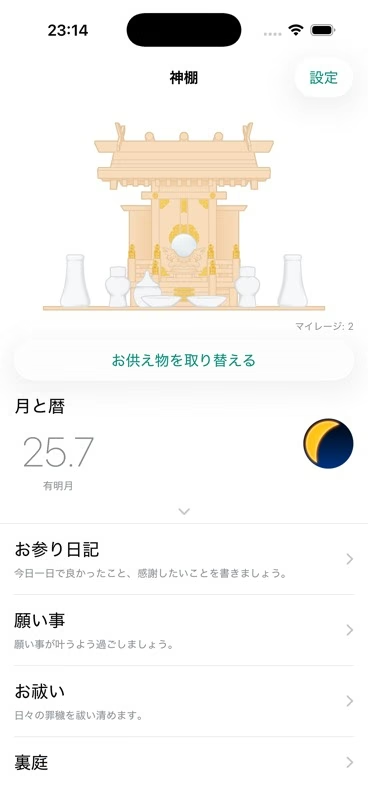
Consider weaving seasonal themes into your prayer in the app:
- As spring approaches, entrust hopes for new beginnings—a new job, school semester, or family milestone—before the kami.
- During midsummer or winter chills, offer a sincere prayer for the stamina and safety of distant relatives and friends.
- In autumn, pause before your digital shelf to list three ordinary things you feel grateful for: a shared meal, a quiet evening, or steady health.
The changing seasons can be a time to offer thanks and hold your wishes before the kami.
Align your daily moments with the quiet rhythm of the seasons
Bring the wisdom of Nijushisekki into your modern life. With the Kamidana App, you can refresh daily offerings, hold quiet reflections, and align your thoughts with nature right from your phone.
Editorial and sourcing policy
Astronomical definitions, historical revisions, and seasonal descriptions in this article are based on research published by the National Astronomical Observatory of Japan (NAOJ) Koyomi Wiki. Regional weather and personal prayer practices can vary across households.