How to Visit a Shinto Shrine: Complete Etiquette Guide
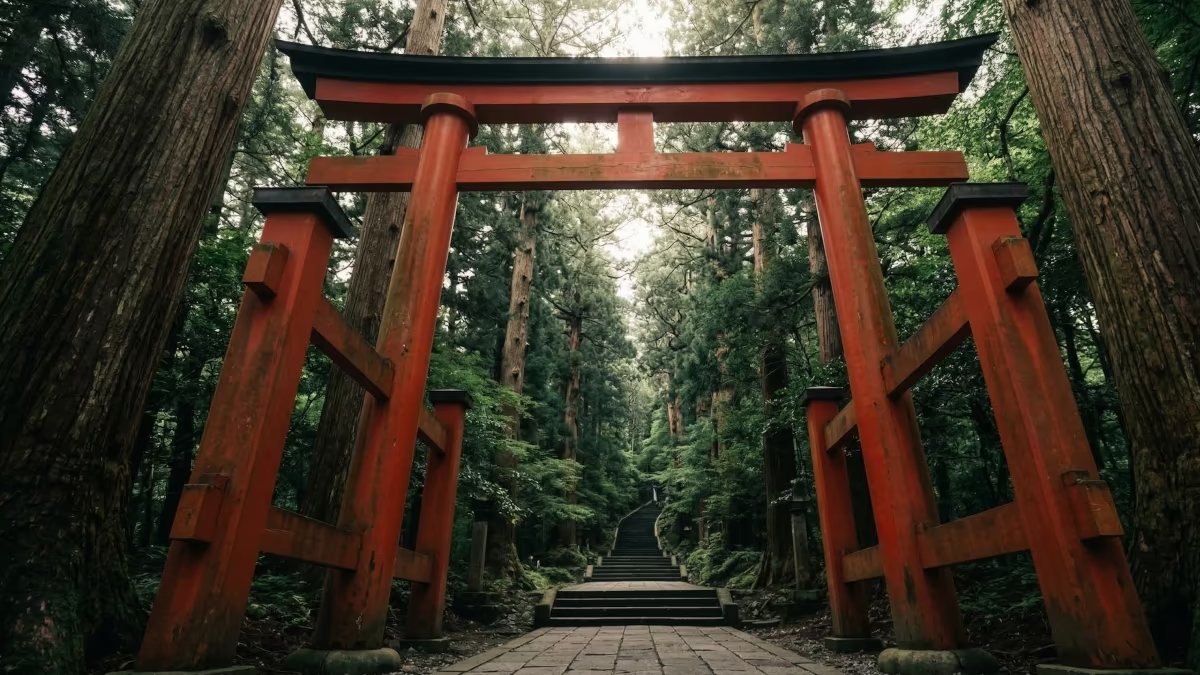
Visiting a Shinto shrine is one of the most quietly profound experiences Japan offers. Even if you're not religious, there's something unmistakable about walking through a torii gate — the air changes, the noise recedes, and a different kind of attention settles in.
But it's natural to feel uncertain about what to do. Should you bow? When do you clap? What are you supposed to pray for?
This guide walks through the complete process, step by step, without assuming any prior knowledge of Shinto.
Before You Enter: The Torii Gate
The torii (鳥居) is the iconic gateway that marks the boundary between the ordinary world and the sacred space of the shrine. Passing through it is a transition, not just a walk through an archway.
What to Do at the Torii
- Bow once before passing through. A simple, brief bow is sufficient — this acknowledges you are entering sacred space.
- A note on walking down the center of the sando: You may have read that you should avoid the center of the path (the sando), as "the center is reserved for the kami." This idea has circulated widely online in recent years — but it is worth knowing that many Japanese people, including regular shrine visitors, are unfamiliar with it, and some find the framing questionable. It does not appear to be a well-established ancient rule. Walking naturally down the path, at whatever position feels right, is completely fine.
- Bow once again when you exit through the torii at the end of your visit.
These gestures are not mandatory rules — they are expressions of awareness. Many people pass through torii without bowing, and that is fine. But if you're asking what the tradition is, this is it.
Purification: The Temizuya (手水舎)
Before approaching the main shrine building, you'll typically pass a stone basin of running water called the temizuya (手水舎) or chōzuya. This is where you purify your hands — and symbolically, your mind — before entering the sacred space.
Step-by-Step: How to Use the Temizuya
- Pick up the ladle (hishaku) with your right hand
- Pour water over your left hand
- Transfer the ladle to your left hand
- Pour water over your right hand
- Transfer back to your right hand, cup your left hand, pour water into it
- Rinse your mouth with the water in your left hand (sometimes omitted)
- Rinse your left hand once more
- Hold the ladle vertically so the remaining water rinses the handle, then place it back
At many popular shrines today, the temizuya has been adapted with flowing water stations. Follow whatever setup is present. The intention of purification matters more than the exact sequence.
At the Main Shrine Building: The Haiden
The main building where visitors offer prayers is called the haiden (拝殿). You'll usually see a large rope bell (suzu) hanging in front, a wooden offertory box (saisen-bako), and an area to stand and pray.
The Standard Sequence: Nirei Nihakushu Ichirei
The most common form of shrine prayer is called nirei nihakushu ichirei (二礼二拍手一礼) — "two bows, two claps, one bow."
- Toss a coin into the offertory box. Any denomination works — this is an offering, not a payment.
- Ring the bell if one is present — grab the rope and shake it gently two or three times. This announces your arrival to the kami.
- Bow twice — two deep, deliberate bows from the waist (about 45 degrees).
- Clap twice — bring your hands together and clap twice, clearly.
- Hold your hands together and spend a moment in prayer or quiet attention.
- Bow once more — one final bow to close.
This takes less than a minute. There is no need to kneel, speak aloud, or perform any additional gesture.
What to Pray For
You can pray for anything that is genuinely important to you. Health, safety, clarity, relationships, gratitude for what you have, or simply a quiet wish for the day ahead. There is no list of approved topics.
Many people don't pray for anything specific. They simply stand for a moment, feel the stillness of the space, and let that be the practice. That counts too.
In Shinto, prayer is less about petition and more about acknowledgment — acknowledging the moment you're in, the forces larger than yourself, and the intention you carry forward.
Omikuji: Fortune Slips
After praying, you may want to draw an omikuji (おみくじ) — a paper fortune slip. These are available at a small fee (typically ¥100–200) from a box or drawer near the shrine office.
| Rank | Japanese | Meaning |
|---|---|---|
| Great Blessing | 大吉 (Daikichi) | The highest fortune — relatively rare |
| Middle Blessing | 中吉 (Chūkichi) | Good fortune in many areas |
| Small Blessing | 小吉 (Shōkichi) | Positive but with caution |
| Blessing | 吉 (Kichi) | General good fortune |
| Half Blessing | 半吉 (Hankichi) | Mixed — some good, some caution |
| Small Curse | 小凶 (Shōkyō) | Minor challenges ahead |
| Curse | 凶 (Kyō) | Difficulties — but also guidance for improvement |
Receiving a "curse" (凶) fortune is not considered a prediction of disaster — it is an invitation for reflection and course correction. Many shrines provide a rack where you can tie your omikuji, releasing the fortune to the kami. You can also take it home.
Buying Omamori and Ofuda
Most shrines have an office (社務所, shamusho) where you can purchase omamori (lucky charms) and ofuda (talismans) issued with prayers by the shrine's priests.
For guidance on different types of omamori, see our complete omamori guide. For ofuda — including how to display and care for them properly — see our ofuda guide.
General Etiquette
| Do | Avoid |
|---|---|
| Speak quietly or maintain silence | Loud voices, music without headphones |
| Follow posted signs about photography | Some inner sanctuaries prohibit photography |
| Keep to designated paths | Entering restricted areas behind low fences or rope barriers |
| Treat sacred objects with care | Touching or moving altar items without permission |
Bringing the Practice Home
One of the quietest things about a shrine visit is how it changes the texture of the rest of the day. The brief pause — the water, the bow, the moment of attention — stays with you.
Many people in Japan try to replicate this quality each morning at home, through a simple ritual at a kamidana. If that idea interests you, our kamidana setup guide explains how to begin, even without a traditional altar.
Kamidana App
Kamidana brings the essence of that morning shrine visit into a quiet digital space. A daily omairi — fresh offerings, a moment of stillness, a gentle intention for the day ahead. Whether you're near a shrine or far from one, the practice is always available.